

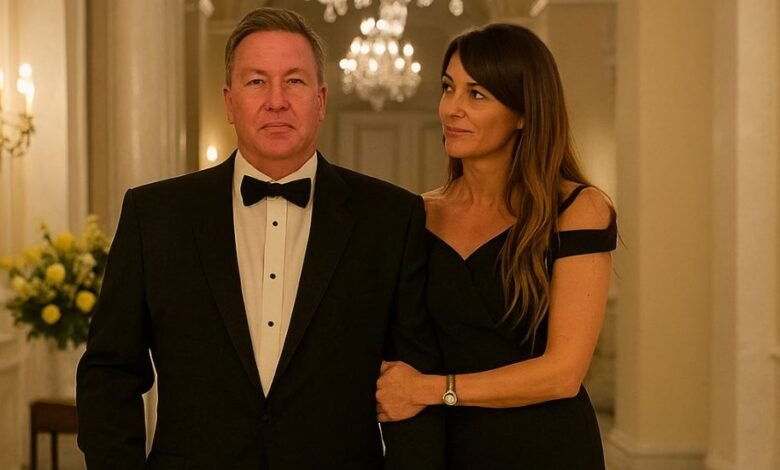
If you’re a viewer of BBC London or catch the regional news across the South East, you’ll know Elizabeth Rizzini. She’s the warm and knowledgeable presence who tells us whether we’ll need an umbrella or sunglasses. For years, she’s been a trusted face delivering the weather, but for me, her story became truly fascinating when I saw a different side of her—not as a presenter, but as a pillar of support in her partner Frank Gardner’s powerful documentary.
I think Elizabeth represents something many of us can relate to: a professional who excels in their career, while also navigating a rich, complex personal life. So, let’s pull back the curtain on the weather maps and discover the person behind the forecast.
From Maps to Mainstream: Elizabeth’s Career Journey
Elizabeth wasn’t always in front of the camera. I’ve always found it interesting when TV personalities have a solid, “behind-the-scenes” foundation, and Elizabeth’s is rock-solid. She started her career at the Met Office, the UK’s real-life hub for all things weather. That’s where the real, hardcore science happens. This background isn’t just a line on a CV; it’s what gives her forecasts a depth of understanding you can’t just learn from a teleprompter.
From that scientific base, she seamlessly transitioned into broadcasting. You can now catch her on:
- BBC London, where she often works with Wendy Hurrell and Kate Kinsella.
- BBC South East Today, keeping folks in Kent and Sussex informed.
- Look East, for viewers in parts of the East of England.
It’s this blend of scientific rigor and on-screen charm that has made her such a lasting fixture.
A Glimpse into Her Personal World: Love, Life, and an Italian Hint
Now, this is where things get a bit more personal, pieced together from the little glimpses she’s shared publicly. Like many, I was curious about her life away from the studio. Back in 2016, she replied to a tweet with a casual, “My husband is Italian.” It was one of those off-hand comments that sparked a lot of curiosity among followers, leading many to believe she was previously married.
Today, she is in a long-term, very public relationship with Frank Gardner, the BBC’s brilliant Security Correspondent. It’s this relationship that, for me, added a whole new layer to her public persona.
“Being Frank”: A Documentary That Changed the Conversation
In November 2020, the BBC aired Being Frank: The Frank Gardner Story. If you haven’t seen it, I can’t recommend it enough. It’s more than a documentary; it’s a raw, unflinching, and deeply human portrait.
In case some are unaware of the context: in 2004, Frank was shot and severely wounded in a terrorist attack in Saudi Arabia. This accident rendered him partially paralyzed and he is now on a wheelchair. The documentary does not fear the physical and emotional aspects of his disability. It reveals the struggles of daily life, the frustrations, and yet the tremendous strength and black humour that has been his recovery process.
Elizabeth’s Role: The Quiet Strength Behind the Scenes
This is where we see Elizabeth in a completely different light. She isn’t the weather presenter here; she’s Frank’s partner, his ally, his normal in a world that has been radically altered. Her presence in the film is quiet but profound. You see her not as a celebrity, but as someone providing steadfast support, sharing in the everyday moments that make up a life.
Her involvement did something crucial: it showed that a disability doesn’t just affect the individual; it impacts the entire family and support network. By sharing their story, they both offered a masterclass in love, adaptation, and what it truly means to be an equal partner. It was a brave move that pushed the conversation about disability into a more intimate and honest space.
What Frank and Elizabeth’s Story Teaches Us About Disability
Watching the documentary, I was struck by how it moved beyond abstract awareness to tangible understanding. It’s one thing to know the statistics about accessibility; it’s another to see Frank and Elizabeth navigating the world.
Let’s break down some of the realities their story highlights:
| The Common Challenge | The Everyday Reality & Adaptation |
|---|---|
| Getting From A to B | It’s not just using a wheelchair. It’s the mental load of planning every trip—checking if a restaurant has a step, if a friend’s house is accessible, if the train station lift is working. |
| The “Small” Tasks | Things like reaching for a high shelf or navigating a crowded room become strategic puzzles. Their story shows the importance of adapted homes and assistive tech, but also simple, practical help. |
| Public Perception | Frank has spoken about being talked down to or pitied. Their partnership normalizes the experience, showing that a person with a disability is, first and foremost, a person. |
How We Can All Be Better Allies: Four Simple Steps
Inspired by what I saw in the documentary, I’ve been trying to be more mindful in my own actions. Here’s what I’ve learned from watching Elizabeth and Frank’s dynamic:
- Ask, Don’t Assume. The golden rule. If you think someone might need help, just ask. And be cool if they say no.
- Talk Directly to the Person. It sounds obvious, but so many people talk to the companion instead of the individual. Engage with the person directly.
- Notice Your Environment. Is there a bin blocking the ramp? Are the accessible toilets being used for storage? A little awareness can go a long way.
- Listen to Their Stories. This is the biggest one. The best way to understand is to listen to the people who live this reality every day. Documentaries like Being Frank are a perfect place to start.
Elizabeth Rizzini: A Story of Evolution
It’s fascinating to see how a person’s public story can evolve.
| The Early Chapter | The Present Day | |
|---|---|---|
| Her Focus | Building a career from a science background into broadcasting. | A established, trusted presenter and a supportive, public partner. |
| Her Voice | Primarily heard explaining weather systems. | Using her platform, albeit indirectly, to support a vital conversation about disability and resilience. |
| The Big Picture | A professional meteorologist. | A multifaceted woman: presenter, partner, and an unexpected advocate. |
Your Questions, Answered (FAQs)
Q1: How is Elizabeth Rizzini connected to disability advocacy?
Through her partner, Frank Gardner. His life-changing injury and their shared experience were the focus of the documentary Being Frank. By sharing their life so openly, they’ve both become powerful, authentic voices for understanding disability.
Q2: Where can I usually see her on TV?
She’s a regular on BBC London, BBC South East Today, and Look East. Schedules can change, so your best bet is to check the daily BBC regional listings!
Q3: Was Elizabeth married before?
Based on her own past social media activity, it’s widely believed she was previously married. She is now in a long-term relationship with Frank Gardner.
Q4: What did she do before the BBC?
She worked as a meteorologist at the Met Office. This isn’t just a fun fact—it’s the core of her expertise and why her forecasts are so reliable.
Q5: Where can I learn more about Frank’s story?
The documentary Being Frank: The Frank Gardner Story is the best place to start. It was on BBC Two and is often available on BBC iPlayer. Frank has also written incredibly moving autobiographies.
A Final Thought
The story by Elizabeth Rizzini is a reminder to me that we are all than what we are called at work. She is an undoubtedly a brilliant weather presenter. But she too is a monument to the power of solidarity, and of the incredible influence of telling our own stories. It is not only that they have covered an issue; she and Frank have lived it in front of people and helped to create a more understanding and knowledgeable world. And that, in my book, is a promise of a better, more tolerant future.
